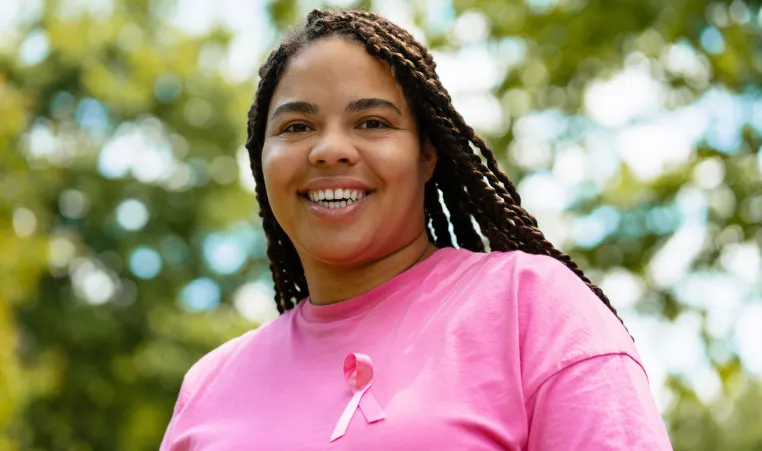
Breast Cancer Awareness Month: Nutrition and Its Role
In October, we acknowledge Breast Cancer Awareness Month. Let's take a few minutes now to learn about the science behind breast cancer, the top six prevention recommendations, plus realistic nutrition and exercise tips from a registered dietitian.
The Science: Cancer is caused by gene changes (“mutations”) that alter your body’s cells. Changes to cell processes can lead to abnormal growth, which may develop into cancer. In breast cancer, about 1 in10 cases are linked to inherited mutations passed down in families. Risk factors for the remaining 9 in 10 breast cancer cases often relate to hormone treatments, suboptimal nutrition, limited exercise, and being at a higher body weight.
No one can prevent cancer completely, but you can minimize your breast cancer risk with these top six recommendations:
Make time for 150-300 minutes of moderate-intensity physical activity weekly. Find activities you enjoy and treat them as calendar “events” in your routine.
Do your best to stay at a healthy weight throughout adulthood. See a registered dietitian (RD/RDN) for personalized support.
Keep nutrition simple, focusing on the five food groups. Eat more fruits, vegetables, lean proteins, low fat dairy, and whole grains. Try not to get caught up in expensive “health products” and supplements.
If you are of childbearing age, plan to breastfeed your babies and/or pump for the first months, year, or as long as you can. See a certified lactation counselor (CLC or IBCLC) for help along the way.
Do not smoke and do not drink alcohol. If you still choose to drink alcohol, limit yourself to 1 drink daily. Opt for sparkling or spritzer drinks instead of alcohol because no amount of alcohol is considered “safe” when it comes to cancer.
Dive deep into the risks versus benefits of hormone-related treatments alongside a trusted health care provider.
Now that you have a few practical tips for each category, let’s take a closer look at nutrition for breast cancer risk reduction.
Plant foods (vegetables, fruits, whole grains, beans, peas, nuts/seeds, etc.) are typically “protective” against the cell damage that can lead to cancer. Many of these plant foods have phytochemicals (colorful, health-promoting compounds such as antioxidants) that protect your body’s cells from damage.
Some research suggests that you may be able to reduce breast cancer risk by eating more vegetables, fruits, and calcium-rich dairy products, while eating fewer red and processed meats.
Soy is another plant-based food with the potential to reduce cancer risk. In the past, it was thought that soy compounds (isoflavones) might have promoted breast cancer because their chemical structures look like human estrogen. These were animal studies, but it was later found that humans process the isoflavones differently.
In other words, eating soy foods (tofu, edamame, soy milk, tempeh, etc.) does not increase cancer risk! In fact, soy foods may even reduce the risk of cancer because isoflavones can act as antioxidants and reduce inflammation. Soy foods also provide protein, fiber, nutritious fats, potassium, and magnesium to help meet your body's nutrient needs.
Don’t take soy isoflavone supplements, though! Your body benefits more from isoflavones in real soy foods. More research is needed to understand if soy isoflavone supplements are safe, or if they may increase cancer risk.
If you have questions about breast cancer and nutrition, or a variety of other topics, visit aicr.org for trustworthy and evidence-based information.
Written by: Hannah Kirtley MMN, RDN, LMNT, CLC
Group Fitness Instructor and Registered Dietitian at the Southwest YMCA