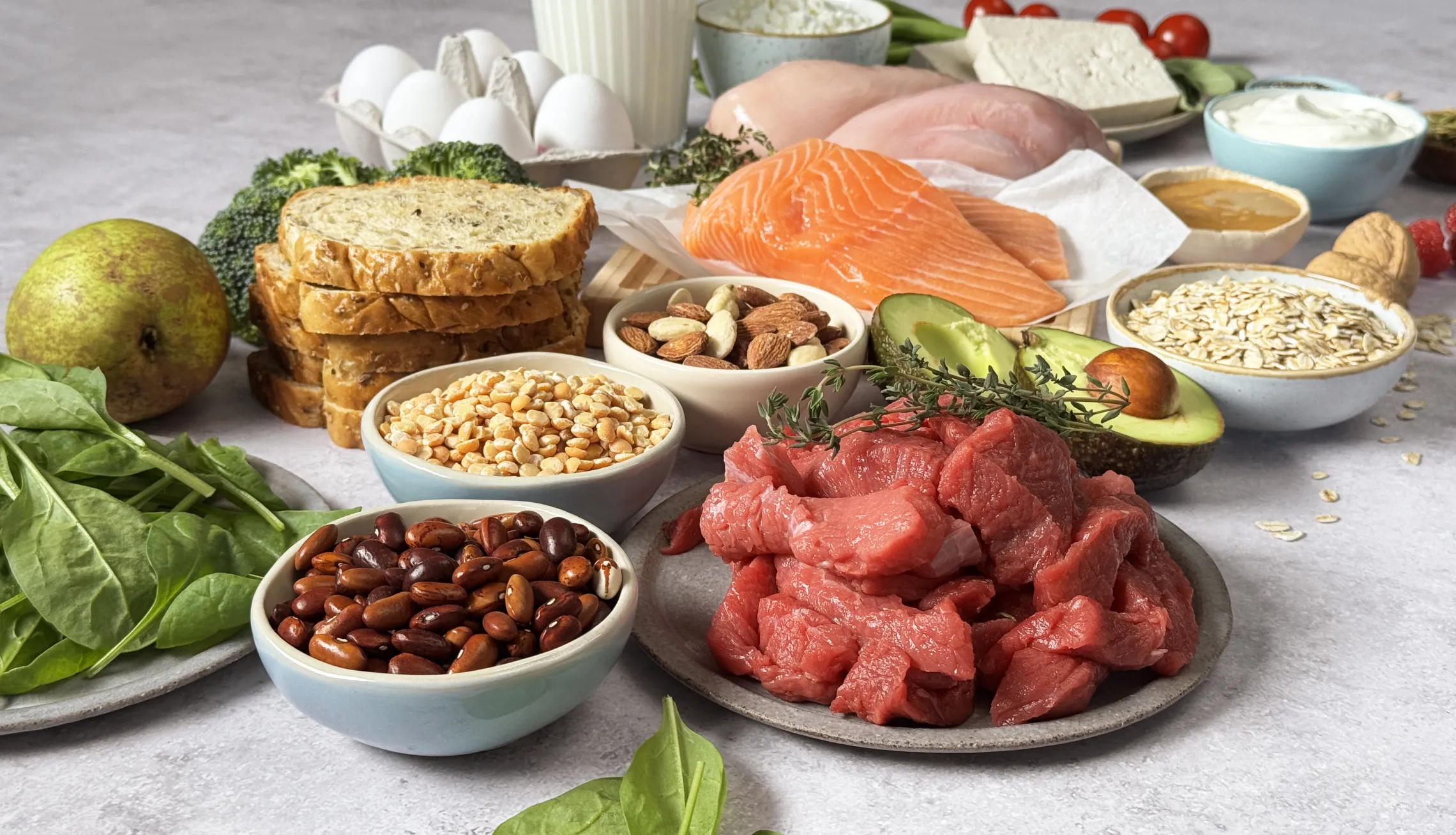
It’s one of the biggest nutrition trends right now—but is it actually here to stay?
High-protein diets are flooding the weight loss and nutrition space, leaving a lot of unanswered questions behind:
- How much protein should I eat daily?
- How do I possibly get that much protein in? I don’t eat that much!
- What kinds of protein should I eat? Does it matter?
Let’s break it down in a way that’s practical and easy to apply to everyday life.
What Is the Take-Home Message?
When combined with a diet rich in fruits, vegetables, and whole grains, a variety of protein sources can support muscle health and overall wellness.
And timing matters—spreading protein throughout the day is more effective than eating it all in one meal.
Read on to discover:
- Where you find protein in your diet
- The components of a high-protein diet
- The benefits of eating high protein
- How to add more protein to breakfast
Where Do We Get Protein in Our Diet?
Protein sources fall into two main categories:
Animal Proteins - "Complete Proteins”
These include:
- Meat
- Eggs
- Fish
- Dairy (milk, cheese, yogurt)
- Collagen
Most animal proteins are considered “complete” or “high quality,” meaning they contain all nine essential amino acids (collagen is an exception).
Plant Proteins - “Incomplete Proteins”
These include:
- Beans and legumes
- Grains
- Nuts and seeds
- Some vegetables
Apart from soy and quinoa, plant proteins are often considered “incomplete.” This does not mean they are bad or do not count—they simply lack one or more essential amino acids. However, this does not make them less valuable. Combining different plant-based foods can help fill in those gaps.
How Do You Get All Essential Amino Acids on a Plant-Based Diet?
This can be achieved through complementarity, which refers to combining two plant-based proteins that cover each other’s amino acid deficiencies. Commonly, grains are complementary with beans, legumes, nuts, and seeds.
For example:
- Red beans + rice = complete
- Black beans + corn tortillas = complete
- Nut butter + whole wheat bread = complete
A note on plant-based proteins:
Plant proteins are less digestible than animal-based proteins, making it harder for the body to absorb them. If following a fully plant-based diet, higher protein consumption may be necessary to achieve the same benefits.
What Is a High-Protein Diet Exactly?
In short, a diet rich in lean meat, dairy, legumes, whole grains, nuts, and seeds. Protein is found in all these sources, along with other essential vitamins and minerals.
A few things to consider when planning your high-protein diet:
- Aim for at least 20g of protein at each meal
- This level of intake helps stimulate muscle growth
- For plant proteins, it is best to match complementary proteins at the same meal
What Are the Benefits of a High-Protein Diet?
- Helps you feel fuller, longer
- A meal high in protein will fill you up faster and keep you full longer
- Maintain and/or increase muscle mass
- Protein is essential for muscle maintenance
- Supports muscle growth, especially when combined with 2–3 days per week of strength training
- High-protein intake is associated with increased bone strength
The best overall outcomes occur when protein is derived from whole food sources and combined with a diet rich in vegetables, fruits, whole grains, and dairy.
Breakfast Proteins: More Than Just Eggs
It may be a challenge for some to reach the recommended level of protein (0.5–0.75 g/lb/day). Breakfast often seems to be the hardest meal to achieve adequate protein. Below are a few tips to help increase protein intake.
Protein is found in many foods commonly eaten for breakfast (whole grains, nut butters, dairy). Combine these to kick your day off with a high-protein meal and set yourself up for success. Some examples:
| Breakfast Combination | Protein |
|---|---|
| 6 oz Greek yogurt with berries + 1 slice whole wheat toast with 2 tbsp peanut butter | 30g |
| 1 cup oatmeal + 1 cup soy milk + 1 apple + ¼ cup almonds | 21g |
| 2 strips bacon + 2 eggs + 1 English muffin | 25g |
Final Thought
A high-protein diet doesn’t need to be complicated or overwhelming. By focusing on balanced meals, incorporating a variety of protein sources, and spreading intake throughout the day, you can support muscle health and overall wellness in a way that fits your lifestyle. It's here to stay!
-Nathan T., personal trainer - Buena Vista YMCA Express
References
Gropper, S. A. S., Smith, J. L., & Carr, T. P. (2022). Advanced Nutrition and Human Metabolism. Cengage Learning, Inc.
Schoenfeld, B. J., Aragon, A. A., & Krieger, J. W. (2013). The effect of protein timing on muscle strength and hypertrophy: A meta-analysis. Journal of the International Society of Sports Nutrition, 10(1). https://doi.org/10.1186/1550-2783-10-53